
How Playground Equipment Manufacturers Ensure Safety Compliance
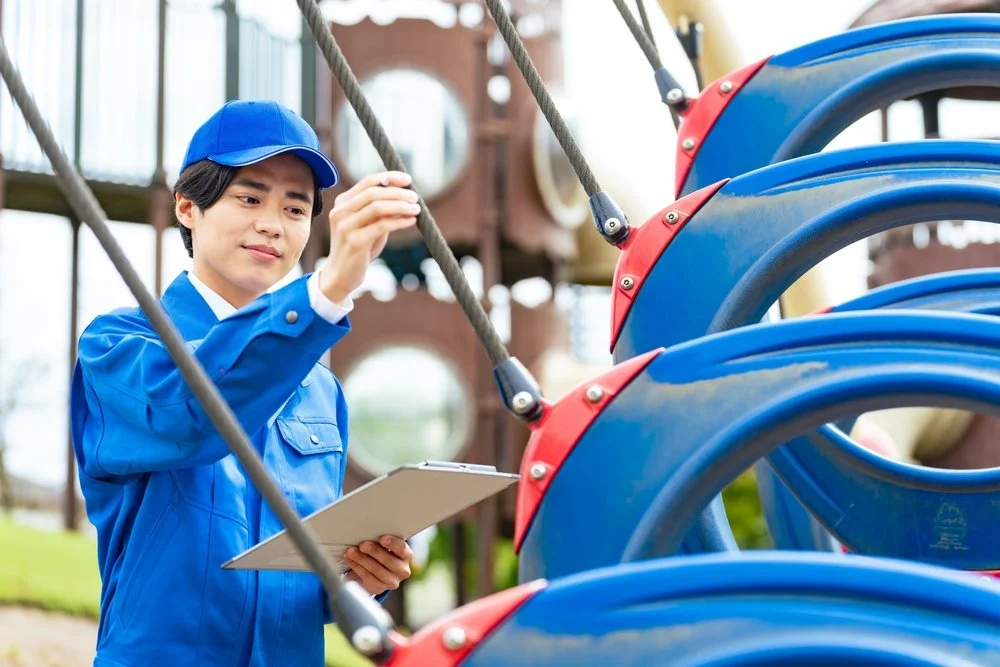
When families visit a playground, safety is often assumed—but behind every slide, climber, and swing is a detailed process of testing, regulation, and quality assurance. Manufacturers play a critical role in ensuring that every piece of equipment meets strict safety requirements before it ever reaches a park or school.
From national guidelines to rigorous testing methods, producing compliant playground equipment requires precision, expertise, and a commitment to long-term safety. Companies like Garrett Parks & Play partner with trusted manufacturers and bring these standards to life in communities, helping ensure safe, reliable play environments.
Understanding National Safety Standards
Playground equipment in the United States is guided by several key organizations that establish safety benchmarks. These standards are not optional—they are essential to protecting children and reducing risk.
ASTM (American Society for Testing and Materials)
ASTM sets technical standards for playground equipment performance. These include:
Structural integrity requirements
Impact attenuation for surfacing
Guidelines for spacing and fall zones
Prevention of entrapment and entanglement hazards
ASTM standards ensure equipment is designed to withstand real-world use safely.
CPSC (Consumer Product Safety Commission)
The CPSC provides comprehensive safety guidelines for public playgrounds, including:
Equipment height limits
Surfacing depth recommendations
Layout and spacing requirements
Maintenance and inspection practices
These guidelines focus on injury prevention and safe design practices.
ADA (Americans with Disabilities Act)
ADA standards ensure accessibility for children of all abilities. This includes:
Accessible routes and pathways
Transfer systems and ramps
Ground-level play components
Inclusive design considerations
ADA compliance ensures that playgrounds are welcoming and usable for everyone.
Together, these standards form the foundation for producing safe and compliant playground equipment across the industry.
How Manufacturers Test Playground Equipment
Before playground equipment is installed, it undergoes extensive testing to ensure it meets or exceeds safety standards. These tests simulate real-world conditions and identify potential risks.
Load Testing
Manufacturers test equipment to ensure it can handle weight and repeated use. This includes:
Static load tests to verify structural strength
Dynamic load tests to simulate movement and active play
Load testing ensures that structures remain stable under heavy use.
Material Quality Testing
The durability of materials is essential for long-term safety. Manufacturers evaluate:
Resistance to weather, UV exposure, and corrosion
Strength of metals, plastics, and composites
Longevity under repeated stress
High-quality materials reduce the risk of breakage or degradation over time.
Fall-Zone Evaluation
Fall zones are critical areas around playground equipment designed to absorb impact. Manufacturers:
Determine required fall-zone dimensions
Test surfacing compatibility and effectiveness
Ensure proper clearance between structures
This testing helps minimize injury risk during falls.
Hardware Inspection
Small components can pose big risks if not properly designed. Manufacturers carefully inspect:
Bolts, screws, and connectors
Potential pinch points
Sharp edges or protrusions
Ensuring hardware integrity prevents injuries caused by faulty or exposed components.
Age-Appropriateness Testing
Not all playground equipment is suitable for every age group. Manufacturers design and test equipment based on developmental stages:
Toddler (2–5 years)
School-age (5–12 years)
Age-appropriate design ensures children can use equipment safely and confidently.
Documentation and Certifications
Safety compliance doesn’t stop at testing—it must be documented and verified. Manufacturers provide detailed records that confirm adherence to industry standards.
Certification Reports
Equipment is often certified by third-party organizations, confirming it meets ASTM and other safety standards.
Product Documentation
Manufacturers provide:
Maintenance recommendations
Safety specifications
This documentation ensures that installers and operators maintain compliance throughout the equipment’s lifecycle.
Compliance Labels
Certified equipment typically includes labels or markings indicating compliance with safety standards, providing transparency and accountability.
Ongoing Quality Assurance
Safety is not a one-time process—it requires continuous monitoring and improvement. Manufacturers implement quality assurance practices such as:
Routine product testing and re-evaluation
Updates to meet evolving safety standards
Feedback integration from installers and users
Continuous improvement of materials and design
These efforts ensure that playground equipment remains safe, reliable, and up-to-date with current regulations.
Communities working with experienced providers like playground companies in Utah benefit from access to equipment that meets these rigorous standards, along with professional installation and maintenance support.
Why Safety Compliance Matters
Compliant playground equipment protects more than just children—it protects communities, schools, and organizations from unnecessary risk. By following strict standards and testing protocols, manufacturers help:
Reduce injuries and accidents
Ensure long-term durability
Maintain public trust in recreational spaces
Support inclusive and accessible play environments
When safety is prioritized from design to installation, playgrounds become spaces where families can relax and children can explore freely.
Final Thoughts
The safety of a playground begins long before installation—it starts with the manufacturers who design, test, and certify every component. Through adherence to ASTM, CPSC, and ADA standards, along with rigorous testing and quality assurance, manufacturers ensure that playground equipment is built to protect and perform.
With the support of trusted providers like Garrett Parks & Play, communities can confidently invest in compliant playground equipment that delivers both safety and lasting value.