How Micro-Adventures in Playgrounds Keep Kids Engaged Longer
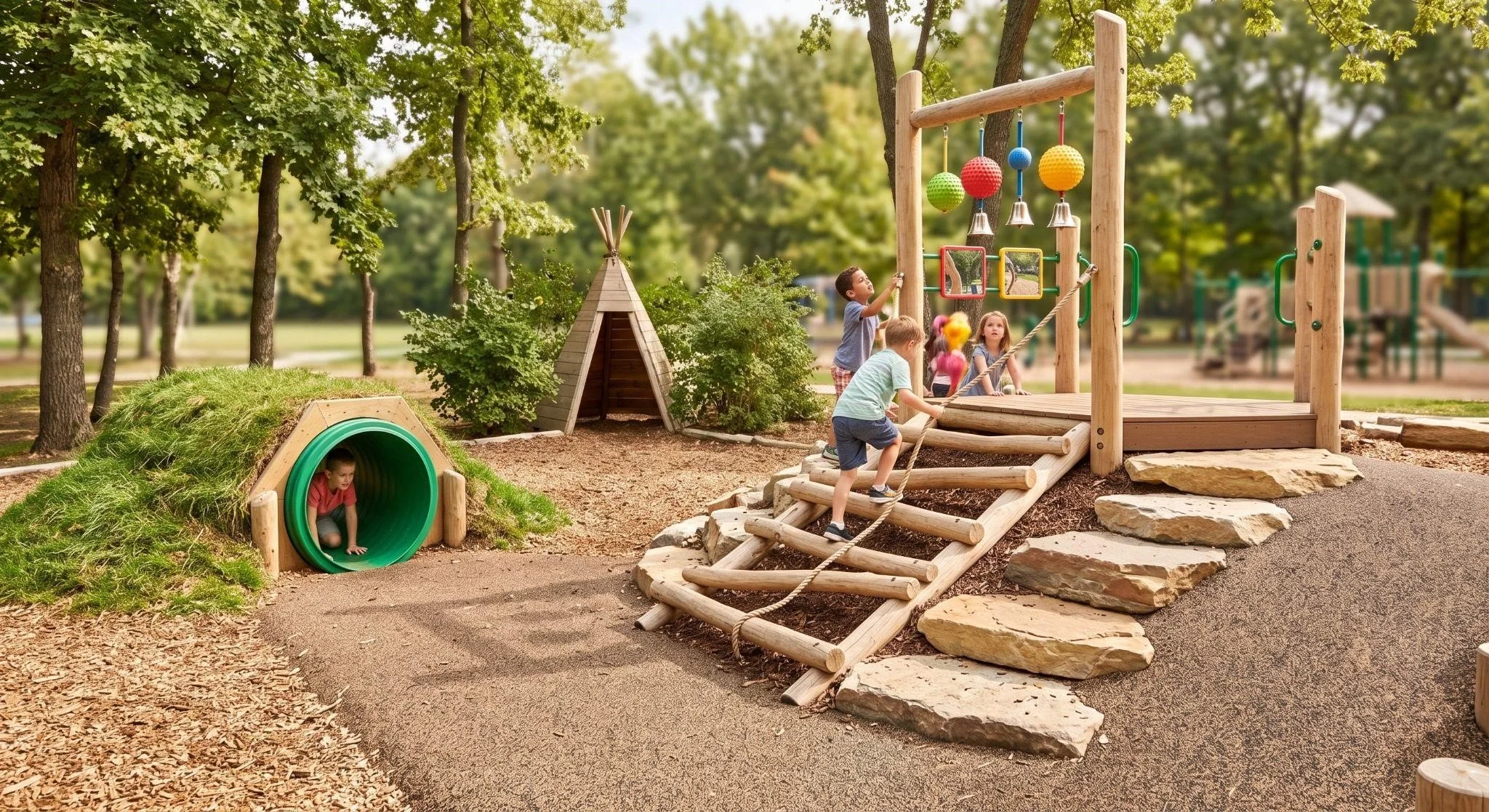
Children rarely experience a playground exactly as designers intended. A climbing structure can become a mountain, a tunnel can turn into a secret passage, and a winding path can lead to an imaginary destination. These small moments of discovery are what make playgrounds memorable.
Modern playground micro-adventures build on this natural curiosity by incorporating features that encourage children to explore, make choices, and discover something new. Instead of moving directly from a swing to a slide, children can encounter hidden features, obstacle trails, sensory experiences, and interactive elements that turn an ordinary visit into an extended adventure.
Discovery Zones Encourage Longer Exploration
A playground with clearly defined discovery zones gives children more reasons to explore beyond the most obvious equipment. Small features tucked around corners, beneath platforms, or along pathways can encourage children to investigate areas they might otherwise overlook.
Hidden windows, interactive panels, crawl spaces, stepping elements, and small climbing challenges can create moments of surprise. Because these features are not always immediately visible, children may discover something new each time they visit.
This sense of discovery can help extend playtime. Instead of completing one activity and moving on, children continue searching for new challenges and creating their own games.
Obstacle Trails Turn Movement Into Adventure
Obstacle trails are another effective way to create mini-adventures within a playground. A sequence of stepping logs, balance elements, climbing walls, bridges, and other challenges gives children a route to follow while allowing them to choose their own pace.
These features combine physical activity with problem-solving. Children must determine how to move from one element to the next, adjust their balance, and decide which challenges they want to attempt.
Climbing paths can provide a similar experience. Different heights, surfaces, and routes allow children to develop coordination and confidence while creating the feeling of progressing through an adventure.
Interactive elements can also be placed throughout these paths, giving children additional reasons to stop, investigate, and continue exploring.
Exploration Builds Curiosity and Problem-Solving
Exploration-based play encourages children to think independently. Rather than simply following instructions, they decide where to go, what to investigate, and how to overcome challenges.
A tunnel might require children to figure out where it leads. A series of stepping elements may require them to choose a route. An interactive feature might encourage them to experiment until they understand how it works.
These experiences naturally support curiosity and problem-solving. Children learn through trial and error while developing confidence in their ability to make decisions.
Independent exploration also gives children opportunities to create their own rules and stories. The playground becomes an environment for imagination rather than simply a collection of equipment.
Sensory Paths Add Another Layer of Discovery
Sensory paths can make a playground more engaging by introducing different textures, sounds, movements, and visual experiences. These features can be incorporated into pathways or activity zones without taking up significant amounts of space.
Textured surfaces, musical elements, tactile panels, stepping features, and colorful interactive stations encourage children to use more than one sense while exploring.
Tunnels can create another type of sensory experience. Moving through an enclosed space changes how children see and hear their surroundings while adding an element of anticipation. A tunnel entrance may also create the feeling of entering another part of the playground.
Surprise elements work particularly well because children enjoy discovering something they did not expect.
Hidden Features Keep Play Fresh
One reason children can lose interest in a playground is that they quickly understand how every feature works. Hidden and secondary play elements can make the environment less predictable.
A small climbing wall behind a larger structure, an interactive panel along a pathway, or a secret-looking entrance can provide additional experiences without requiring an entirely new playground.
These details can also encourage repeat visits. Children who discover something new may return to show friends or siblings what they found.
This is an important consideration for communities investing in playgrounds. A design that supports different types of play can remain interesting long after the initial excitement of new equipment has faded.
Designing Adventures for Different Abilities
Micro-adventures should not be limited to children who are physically able to climb or navigate challenging obstacles. Inclusive planning can provide different ways to participate in exploration.
Accessible pathways can connect discovery areas, while ground-level interactive features allow children with different mobility needs to engage with the environment. Sensory stations can provide alternatives to physically demanding activities, and varied challenge levels give children opportunities to choose experiences that match their abilities.
Creating multiple routes through a playground also gives children greater independence. One child might take a climbing route while another follows an accessible pathway and explores interactive features along the way.
This approach makes exploration a shared experience rather than something available only to certain users.
Designing Playgrounds That Invite Return Visits
The most engaging playgrounds give children more than one reason to return. Variety, discovery, and flexible play experiences help ensure that a playground can feel different from one visit to the next.
Designers can create this variety through interconnected activity zones, hidden features, obstacle trails, sensory paths, and interactive components. When children can make different choices each time they play, the experience remains dynamic.
Communities planning these environments can work with playground companies in Idaho to develop custom playground concepts that combine physical challenges with imaginative and exploration-based play.
The goal is not simply to add more equipment. Instead, each feature should contribute to a cohesive environment that encourages children to move, discover, and create their own adventures.
Creating Playgrounds Full of Discovery
A great playground does not need to overwhelm children with equipment to keep them engaged. Small details can have a significant impact when they are incorporated with purpose.
Hidden play elements encourage curiosity, obstacle trails turn movement into adventure, and sensory paths provide new ways to explore. Together, these features give children opportunities to make choices, solve problems, use their imagination, and play independently.
By incorporating playground micro-adventures into the design process, communities can create spaces that encourage children to look closer, explore further, and return with new ideas each time. With thoughtful planning from Garrett Parks & Play, a playground can become more than a place to play—it can become an environment where every pathway, tunnel, challenge, and hidden feature offers another opportunity for discovery.